
 EN
EN



Many people might think of a city filled with ancient wooden houses, small streams flowing through alleyways, and a city atmosphere surrounded by beautiful nature. It is one of the most popular destinations for tourists who travel to China. But behind these beauty lies Liqian is not only a charming tourist city, but also a city with a long history, through its development, social and cultural changes. As well as the important events that have shaped the city into the unique place it is today.
Before Liqian became a tourist destination known to people around the world, what was the city's origins and history? Let's take a step back in time to get to know Liqian, from its foundation in the past to the image of the city we know today.
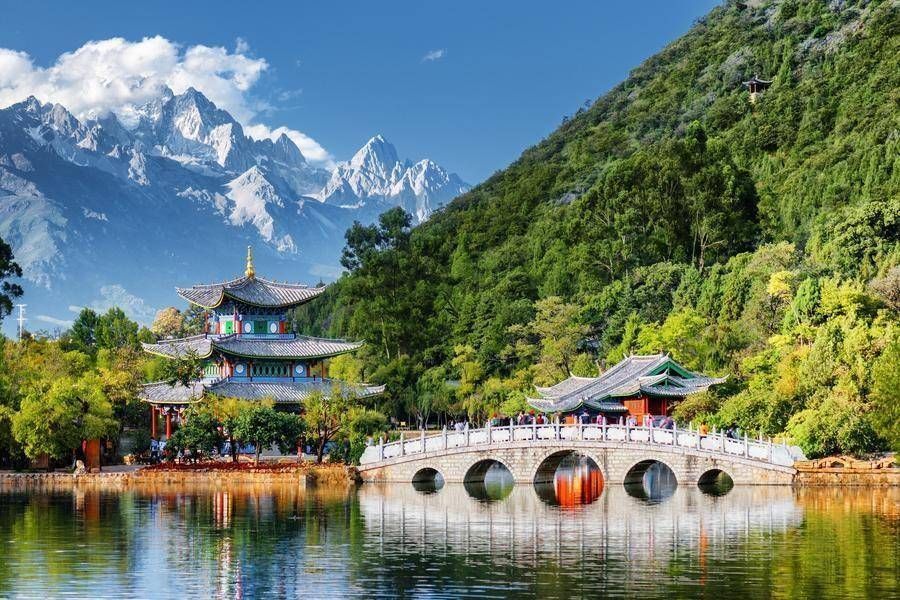
Liangjiang is a provincial-level city located in the northwest of Yunnan Province, southwest of China. Its terrain is located in the Huizong Mountains range, a region where the Tibetan plateau gradually slopes down into the steep mountain range stretching from north to south. As a result, the elevation of Liangjiang varies greatly, ranging from the lowest area in Huiping District, which is approximately 1,015 meters above sea level, to the Mount Golden Dragon Snow, which is approximately 5,600 meters high.
The Naxi migrated down from the northwestern highlands of China to escape the war, gradually settling down and changing their way of life to engage in agriculture in the Liangjiang Plain over a thousand years ago. Before the Naxi migrated to settle in Lijiang, many indigenous groups already lived in this area; most of them were the Tibetan-Burmese language group, which was scattered in the valleys and basins of the Jinsha River. The Naxi people initially established a community in the village of Paiza.
In the 13th century
Liangjiang became an important strategic point on the ancient Tea Horse Road, which connected trade between Yunnan, Tibet, and India as the Mongol army expanded its power. Local leaders from the Mu clan were appointed as the rulers. The Mu clan therefore moved its administrative center from Gaosha to the slopes of Shujing and built a new city named “Taizhou City.” Or in another name it is also known as Old City of Liqian By deliberately creating no city walls surrounding it, according to the beliefs of the Naxi people, Taizhou grew in an open manner and blended Chinese, Han, Tibetan, and Bai architectural styles together harmoniously.
During the 14th–17th centuries
After the completion of the city of Taizhou, Li Jiang reached his peak prosperity as a key strategic point on the tea and horse routes. The Mu family became powerful and wealthy, building the Mu Mansion and being dubbed “the Mu family.”Forbidden Palace of the South”
The transition to centralized rule (the Qing Dynasty, 1723)
The political turning point occurred during the reign of Emperor Yongzheng. The Qing court adopted the “qi tu guili” policy, abolishing the local ruling system of the Mu clan that had been inherited for generations and replacing it with officials from the central government. Although the Mu clan lost its political power, the urban planning system and the way of life of the Nanyis remained unchanged.
From the early 20th century until before 1996
As the Republic era and the founding of the new China began, the routes of the Sha and Ma lines began to lose popularity due to the arrival of roads and automobiles. Lijiang became just a small agricultural town. In a quiet valley far from civilization, during the 1980s–1990s, some old wooden houses began to be demolished to make way for modern concrete buildings that were built haphazardly. Until the old city began to lose its original identity little by little.
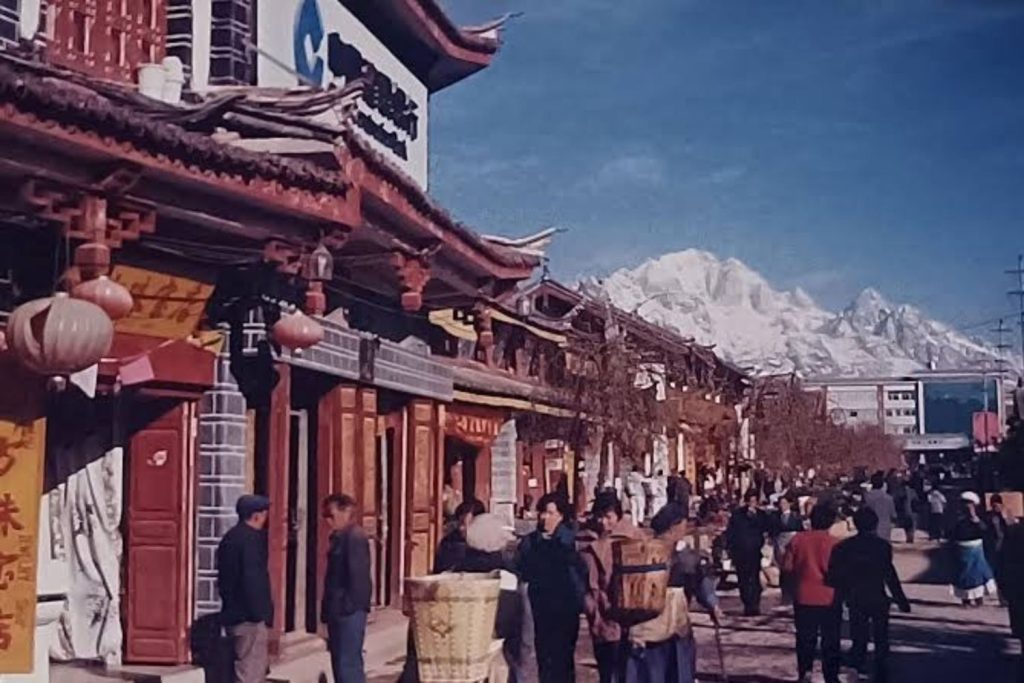
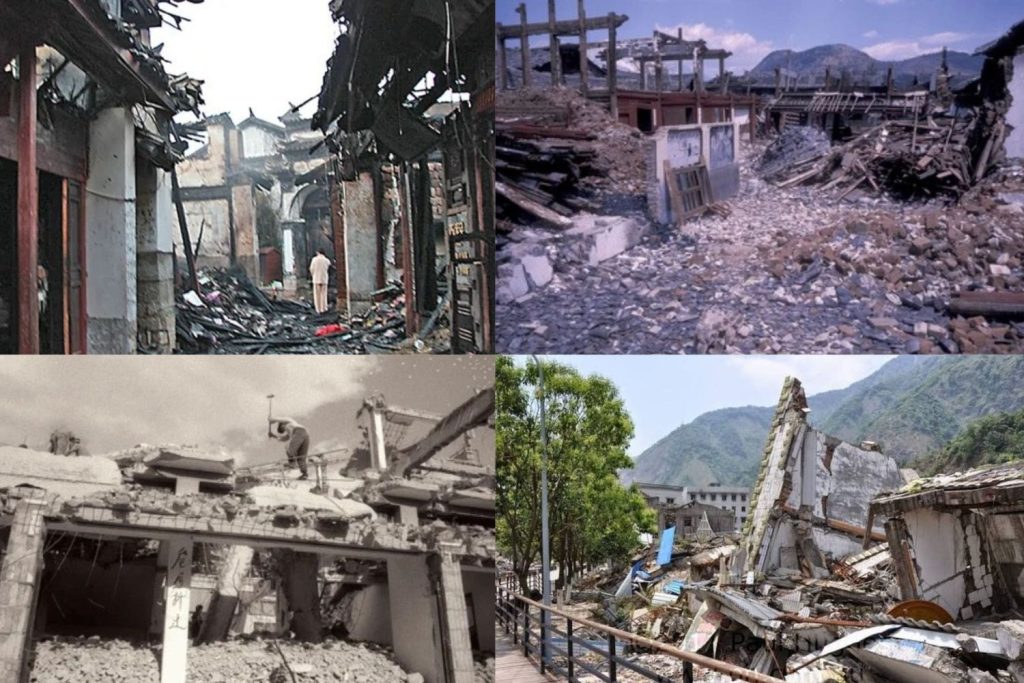
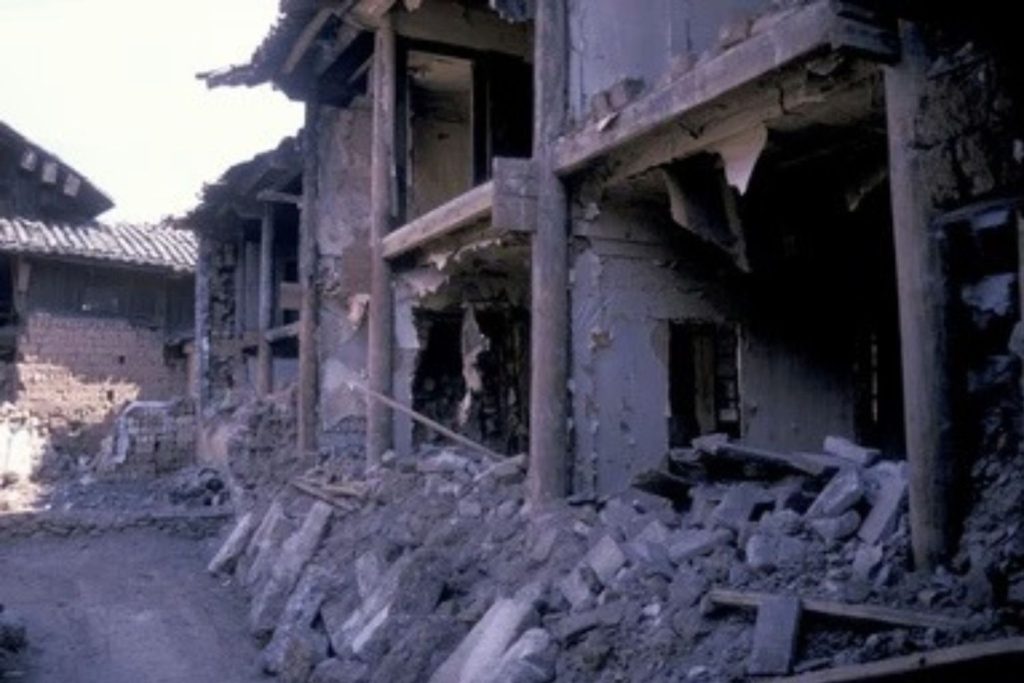
On February 3, 1996 at 19:14, a strong 7.0 magnitude earthquake caused severe damage in the city of Liqian. Amid the ruins, an important observation emerged in the city: almost all the modern concrete buildings and tenement houses collapsed while most of the ancient wooden houses of the Naxi people remained standing. This prompted the Chinese government and the World Bank to decide to restore the city by ordering the demolition of the damaged modern concrete buildings and the reconstruction of the old city of Liqian in the traditional architectural style of the Naxi people. As a result, Liqian was registered as a UNESCO World Heritage Site the following year, sparking a surge in the number of travelers.
Today, Lijiang has become one of China's most popular tourist destinations, with a charm that blends the architecture of ancient city ruins that have been designated as a World Heritage Site with the convenience of continuously improving travel services. Especially the Lijiang–Zhangjiakou railway, which makes traveling between the cities even more convenient. Within the old city, there are still many alleys paved with stone, streams flowing through the houses, and ancient bridges. As well as cafes and shops that perfectly blend traditional elements with modern lifestyles.
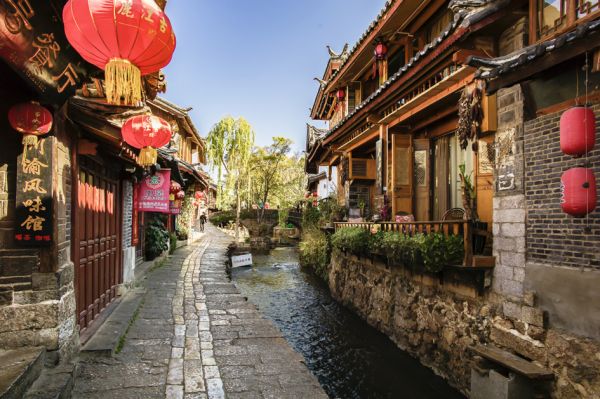
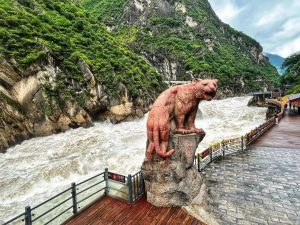
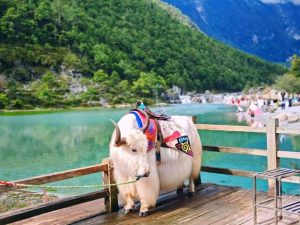
In addition to the charm of the old town, Lijiang is also surrounded by natural attractions that are distinctive and diverse, including: Tiger Jump Channel A vast deep valley with a raging river flowing through it between steep mountain slopes, or Blue Moon Valley Or known as the Paizhou Hu River, with its blue-green waters flowing down through pools and layers of rock, with the backdrop of the Mount Mengyu Snow Dragon.
Another important landmark that shouldn't be missed is Jade Dragon Snow Mountain The high mountains with snow-covered peaks are year-round destinations for tourists. You can take the cable car to enjoy the views of the mountains and the surrounding nature. There are also many other attractions waiting for visitors to experience, making Lijiang a city with both historical beauty, culture, and nature in one place.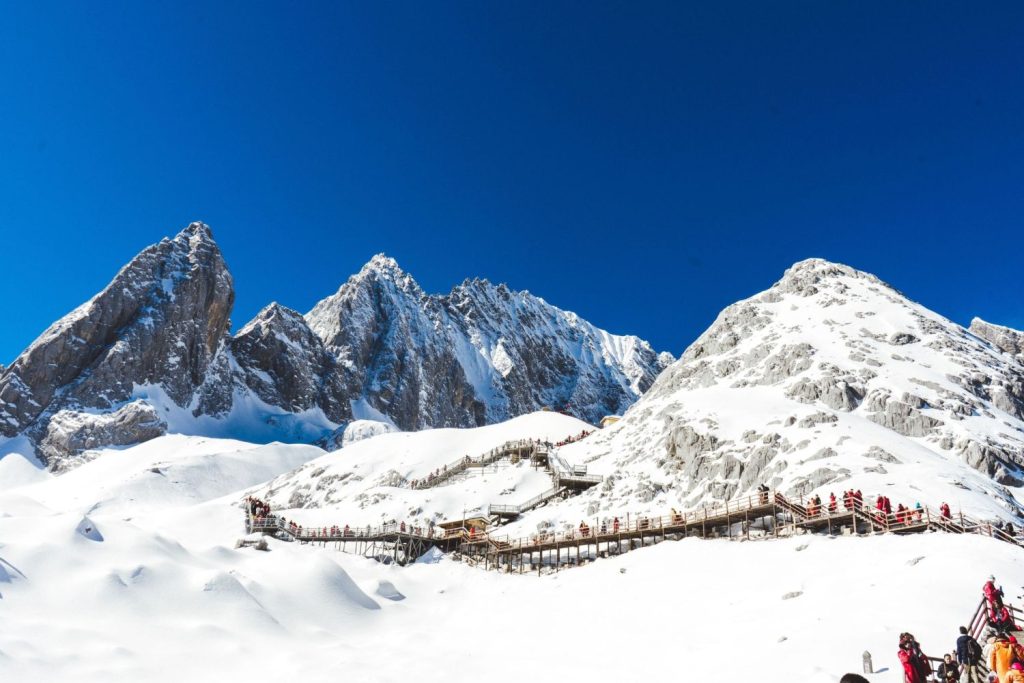 It took more than that to become the present-day Liqian, a tourist city. There is also interesting historical background and past, such as the Naxi tribe or the earthquake that led to the restoration of Lijiang and its designation as a UNESCO World Cultural Heritage Site. All of this has resulted in Liujiang becoming a city that many people want to try and visit at least once if they have the opportunity to travel in China.

“History will not forgive us if we do not seize the opportunity to seize power now. (”History will not forgive us if we do not seize power now“) V.I. Lenin 7 November 1917 Today, 100 years ago, at approximately 10:00 a.m., the Military Revolutionary Committee published Lenin’s appeal to the Russian citizens. The temporary government had been ousted; the power of the state had fallen into the hands of the Soviet Assembly of the representatives of the workers and soldiers of Petrograd, the Military Revolutionary Committee, which led the working and military class of Petrograd on the Neva River. The flagship battleship Aurora, which had previously traveled to Bangkok during the coronation ceremony of His Majesty King Chulalongkorn six years ago (1911), was brought ashore at the opposite bank of the Winter Palace at 21:40. The cannon fire of mock shots rang out, signaling the final assault on the Winter Palace. By midnight, the forces of the revolution, composed of left-wing intellectuals, workers, and peasants, were able to break into the building. The cadets fought fiercely from over a thousand rooms of the Winter Palace. At two o’clock on November 8, 1917, the palace was seized, and all the ministers of the temporary government were arrested. This great revolution was called the October Revolution, or officially known as the ”Great October Socialist Revolution“ (Great October Socialist Revolution). It also has other names such as Red October, the October Uprising, and the events of the October Revolution. This event led to the Russian Civil War that lasted for five years and was a crucial step in the beginning of the world’s first socialist state under the name of the Soviet Union, later known as the Union of Soviet Socialist Republics. The communist leader and the spark of other revolutions that followed, such as Mongolia, China, Cuba, Vietnam, Laos, etc. The reason for calling this event the October Revolution is because at that time. The Julian calendar, which is the older and slower version, is 13 days behind the Gregorian calendar used today. The day of the revolution will coincide with October 25th, when Russia was still a Soviet Union. The 7th of November of every year is considered the national day and is celebrated with great fanfare. Before later changing to November 4 (National Day), the parade is currently held on November 7 at Red Square, not to commemorate the revolution directly but to commemorate the events of 1941 when Soviet troops marched in a military parade to the frontlines during World War II. Putin spoke about the revolution 100 years ago

Crimea is Russia’s most important summer resort region. As a peninsula jutting into the Black Sea in the south, it enjoys a warm climate year-round. It is therefore no surprise that, in addition to ordinary Russians vacationing in Crimea, Russian rulers also favored building permanent summer residences in this region The Livadia Palace is one such example. It is considered the most important summer residence of the Romanov dynasty and was the last palace built by the Romanovs. Although the dynasty lost power later on, this place continued to serve as a summer residence for Soviet leaders as well. So, here are 9 facts + 1 about Livadia Palace you should know…… 1) Livadia was the Romanov dynasty’s summer residence. Livadia Palace is located in the southern part of Crimea, not far from the city of Yalta, a popular resort town among ordinary Russians. The climate in this region is renowned as a health resort and an important recreational destination for the city, especially after the construction of the railroad in the 19th century. In 1861, Tsar Alexander II purchased land in the village of Livadia and built a palace as a gift for his empress; shortly thereafter, he built a smaller palace as a gift for Tsarevich Alexander who would ascend the throne and frequently visit this place, and who also passed away here at the Church of the Holy Cross in Livadia It was here that Tsar Nicholas II ascended the throne following his father’s death, and it was in this very church that Princess Alix of Hesse (Princess Alix of Hesse and by Rhine) was converted to the Russian Orthodox faith and received the new name Alexandra Feodorovna, who became the Tsarina consort of Tsar Nicholas II 2) Livadia was the most expensive “dacha” of the Romanov dynasty At the behest of Tsar Nicholas II, the original Livadia Palace was demolished and a new, more magnificent palace was built in its place—a palace that still stands today. The Tsar spent several million gold rubles on its construction The cornerstone was laid in 1910, and construction was completed just 17 months later. 3) Livadia served as a royal retreat for relaxation and recreation. The royal family frequently traveled to Livadia during the spring and fall seasons traveling by royal train from St. Petersburg to Sevastopol and then by royal ship to the port of Yalta, accompanied by a grand welcoming procession befitting his majesty. The Tsar Empress Zarina, and their daughters and sons would enjoy themselves by breathing the fresh air, taking walks, swimming, sunbathing, hunting, or going for drives during their stay They also enjoyed tennis and photography, and some of these photographs have survived to this day. The royal family made their final visit to Livadia in the spring of 1914, before the outbreak of World War I and the subsequent sudden change of government in 1917 4) Livadia was designed by Nikolai Krasnov, a young and passionate court architect. The Livadia Palace was designed by Nikolai Krasnov, the Imperial Architect who came from a peasant family. At the age of just 24, he received a royal commission from the Imperial Court to lead a team of architects in designing residential buildings in Yalta. More than 60 significant buildings were designed by Krasnov Following the political upheaval of 1917, Krasnov fled to Constantinople, Malta, and Belgrade, in that order, and was granted royal patronage by Tsar Alexander Karajorjevich of Yugoslavia, who appointed him as court architect and commissioned him to design several royal palaces in Yugoslavia, one of which was the Royal Palace of Dedin, the residence of King Alexander

Vasily Saisev, Hero of the Soviet Union, a top-notch sniper who restored Russia’s morale and spirit during difficult times. Captain Vasily Grigoryevich Saisev. Anyone who has seen the movie *Enemy at the Gate*, starring Jude Law, will surely exclaim, “Ohhhhhhh!” Vasily, or “Vasya” as he was nicknamed, was born on March 23, 1915, in the Orenburg Governorate —now Chelyabinsk Oblast in the Ural Mountains region. As a child, Vasya was trained in marksmanship by his grandfather and older brother through hunting wolves and deer. By the age of just 12, Vasya was already bringing home trophies from marksmanship competitions When he reached conscription age, Vasya was assigned to serve as a sailor in the Pacific Fleet in Vladivostok in the Far East. When World War II broke out and Germany launched a surprise invasion of the Soviet Union Vasya and his friends volunteered to be sent to the front lines in Stalingrad, which at the time was a major industrial city named after the leader of the era, Joseph Stalin At that time, Stalin hoped to develop Stalingrad into a world-class industrial hub worthy of bearing his name. On the other side, Hitler—who had initially marched his forces in hopes of capturing Moscow—sought to utterly destroy Stalin’s crown jewel in 1942 – 1943 by reducing Stalingrad to rubble to vent his fury and gain access to oil fields in Chechnya and Azerbaijan. For his part, Stalin was compelled to defend the city bearing his name by any means necessary, so as not to lose face before the people of the world At a time when the Soviet Union was struggling, Stalingrad was a battleground where neither side could gain a clear advantage; both sides took turns seizing control and used every weapon at their disposal to inflict as much devastation on the other as possible. Although the battle lasted only 200 days, the two sides suffered approximately 2 million casualties, making it one of the bloodiest battles in world history. Vasya made a name for himself by killing German soldiers and employing unique hunting techniques—hiding in pipes or lying in wait for days on end without moving—and ultimately 225 people with his Mosin-Nagant sniper rifle. The Soviet authorities publicly honored and publicized the exploits of this hero from the Ural Mountains, making him known to the Soviet people and serving as a source of morale in the fight against the enemy, until he became widely recognized Just a few days before the Battle of Stalingrad ended, Saisev was wounded by a mortar shell and required urgent eye treatment. That same year, Vasya joined the Communist Party, and after recovering from his injuries, he volunteered to fight on the Eastern Front in Germany, eventually being promoted to captain. After the war Vasya moved to Kyiv, where he continued his studies in the textile industry and became a textile engineer. He worked his way up until he became the director of a textile factory in Kyiv. After retiring, Vasya remained in Kyiv until his death at the age of 76 on December 15 December 1991, just ten days before the collapse of the Soviet Union. On January 31, 2006—approximately 15 years later—Vasya’s remains were reinterred near the Mother of Russia Monument in Volgograd (the new name for Stalingrad) alongside other heroes of Stalingrad, with full honors. The city of Stalingrad itself had been completely devastated by the fierce fighting, so reconstruction began in 1946 It took many years for the city to regain its former status as an industrial center. Eventually, during the leadership of Nikita Khrushchev, the city was renamed from Stalingrad to Volgograd—meaning “City on the Volga River”—in 1961, as part of a policy to erase all traces of Stalinism One landmark in Volgograd that cannot be overlooked is the Mother of Russia Monument, erected to commemorate the Russian sons and daughters who sacrificed their lives for their country and to defend their homeland. Construction of the Mother of Russia Monument began in 1959, and by the year