
 EN
EN



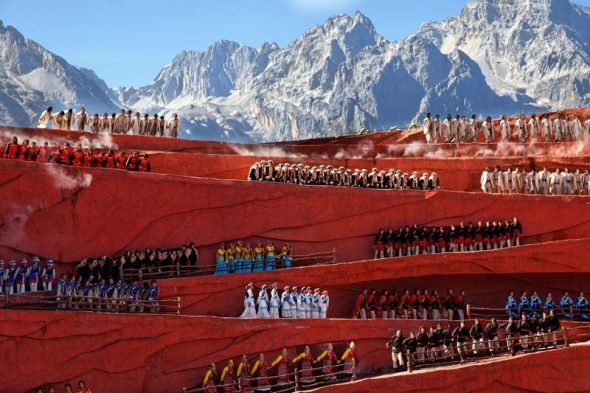
Many people might imagine a city filled with ancient wooden houses, small streams flowing through alleyways, and a city atmosphere surrounded by beautiful nature. This is one of the most popular destinations for tourists visiting China, but behind this beauty lies a different story. Lijiang is not only a charming tourist destination; it is also a city with a long history, marked by its evolution, social and cultural changes, and important events that have shaped the city into the unique place it is today. Before Liqian became a tourist destination known to people around the world, what was the origin and story of this city? Travel back in time to get to know Li Jiang from its foundation in the past to the image of the city we know today. Li Jiang is a provincial-level city located in the northwest of Yunnan Province in the southwest of China. Its terrain is located in the Hengtian Mountains Range, a region where the Tibetan plateau gradually slopes down to the steep mountain ranges that stretch from north to south, resulting in a wide range of elevation differences in Li Jiang’s area. The lowest point is in Huiping District, which is approximately 1,015 meters above sea level, while the highest peak is the Mount Mengliao, with an elevation of approximately 5,600 meters. Background history: The Naxi migrated from the high plateau in northwestern China to escape the war, before gradually settling down and adopting farming methods in the Li Jiang plain basin over a thousand years ago. Before the Naxi migrated to Li Jiang, this area was home to many indigenous groups, most of whom were members of the Tibetan-Burman language family, scattered in the valleys and floodplains of the Jinsha River. The Naxi established their first communities at Baizha Village in the 13th century. Liangjiang became an important strategic location on the ancient Tea Horse Road, which connected trade between Yunnan, Tibet, and India. As the Mongol army expanded its power, the local leader of the Mu family was appointed as the governor. The Mu family therefore moved their administrative center from Xiazao to the slopes of Shujiao and built a new city named “Liangjiang City,” or also known as Old Liangjiang City. They deliberately built no city walls because, according to the beliefs of the Mu people, Liangjiang grew expansively and blended Chinese architecture. Huan Tibet and Bai came together harmoniously during the 14th–17th centuries. After the completion of the city of Taizhou, Lijiang reached its peak prosperity as a key strategic point on the tea and horse routes. The Mu family was powerful and wealthy, building the Mu family manor and being dubbed the “Forbidden Palace of the South.” The transition to central government (the Qing Dynasty, 1723) marked a turning point in politics. The Qing court adopted the “Taqi Gui Liu” policy. Ending the local ruling system of the Mu family that has been passed down for generations Then sent officials from the central government to govern in their place. Although the Mu family lost its political power, the urban planning system and lifestyle of the Naxi people remained unchanged during the early 20th century until 1996, when the Republic era and the founding of the new China came into effect. The tea and horse routes began to lose their popularity due to the arrival of roads and automobiles. Lijiang became a small agricultural town in a quiet and remote valley. In the 1980s–1990s, some old wooden houses were demolished to build modern concrete buildings in an unorganized manner, and the old town began to lose its original characteristics little by little. The changes after the earthquake occurred on February 3, 1996 at 19:14. A strong 7.0 magnitude earthquake caused extensive damage in the city of Liqian. Amid the ruins, an important observation emerged in the city: almost all the modern concrete buildings and tenement houses collapsed. Meanwhile, most of the traditional wooden houses of the Naxi people remained standing. This led the Chinese government and the World Bank to decide to restore the city by demolishing the damaged modern concrete buildings and building a new old city based on the traditional wooden architecture of the Naxi people. Liqian was subsequently registered as a UNESCO World Heritage Site. This sparked a surge in the number of travelers. Today, Liqian has become one of the most popular tourist destinations in China. Its charm combines the architecture of ancient city heritage, which has been registered as a UNESCO World Heritage Site, with the convenience of continuous development in transportation, especially the Liqian–Shangri-La Railway, which makes travel between the city even more convenient. In the old city, there are still alleys paved with stone and streams flowing through the houses and ancient bridges.
End of content
No more pages to load