
 EN
EN
EN
EN


Travel gives you much more than just arriving, because the purpose of the journey and your travel companions are no less important than the destination. That is why we create trips and design routes to cater to specific travel styles, attracting like-minded companions to live life, experience something special, and explore the world the way you want.
3 days 2 nights
Start at 17,900 THB
Nong Tung, Pointing Monk, Phra That Chom Kham
2026
9 days 7 nights
Start at THB 83,900
Tracing the origins of the Thai Ramakien
2026


“The 120th anniversary Siam-Russia trip was organized very well. Good food, good accommodation, great care, and an excellent lecturer who presented history in an interesting way. Both the Thai and local guides were skilled. It was a very fun and impressive trip.”
 Sireerat Behihi
"It was a quite unique trip, not mass-market. The service was decent, and they handled unexpected issues very quickly."
Chanya Udomphorn
"Excellent service, attention to every detail."
Teeradech Lohayanyongkul

With over 16 years of experience, we search for new routes around the world to cater to our customers' diverse interests, offering historical trips, nature explorations, and many more stunning and exotic journeys.

Travel with an experienced team and knowledgeable guides who are experts in the destination.

Trust, by finding the best options including accommodation, food, and attractions, to give the best value to your leisure time.

Gathering a team of all-around service experts specializing in visa processing, flight booking, car rental, and group tour arrangement with unmatched service standards.

Alternative Quarantine (AQ) hotel packages, or alternative state quarantine for Thai nationals, starting at 29,050 Baht/person, including 3 meals and COVID-19 testing services. Ambassador Hotel Bangkok in partnership with World Medical Hospital: Packages starting at 32,460 Baht/person. Book and stay from today until Dec 31, 2021. Avani Atrium Bangkok in partnership with Piyavate Hospital: Packages starting at 42,300 Baht/person. Book and stay from today until Sep 30, 2021. Amaranth Suvarnabhumi Airport, BW Premier Collection by Best Western in partnership with Chularat 9 Airport Hospital: Packages starting at 47,900 Baht/person. Book and stay from today until Oct 30, 2021. COMO Metropolitan Bangkok in partnership with BNH Hospital: Packages starting at 71,710 Baht/person. Book and stay from today until Oct 31, 2021. Clover Asoke Hotel in partnership with Samitivej Hospital: Packages starting at 36,600 Baht/person. Book and stay from today until Sep 30, 2021. Citrus Suites Sukhumvit 6 by Compass Hospitality in partnership with Piyavate Hospital: Packages starting at 38,170 Baht/person. Book and stay from today until Dec 31, 2021. Centre Point Pratunam in partnership with World Medical Hospital: Packages starting at 47,540 Baht/person. Book and stay from today until Sep 30, 2021. Golden Tulip Sovereign Hotel Bangkok in partnership with Piyavate Hospital: Packages starting at 40,230 Baht/person. Book and stay from today until Oct 31, 2021. Holiday Inn Express Bangkok Sukhumvit 11 in partnership with Samitivej Hospital: Packages starting at 29,050 Baht/person. Book and stay from today until Oct 31, 2021.
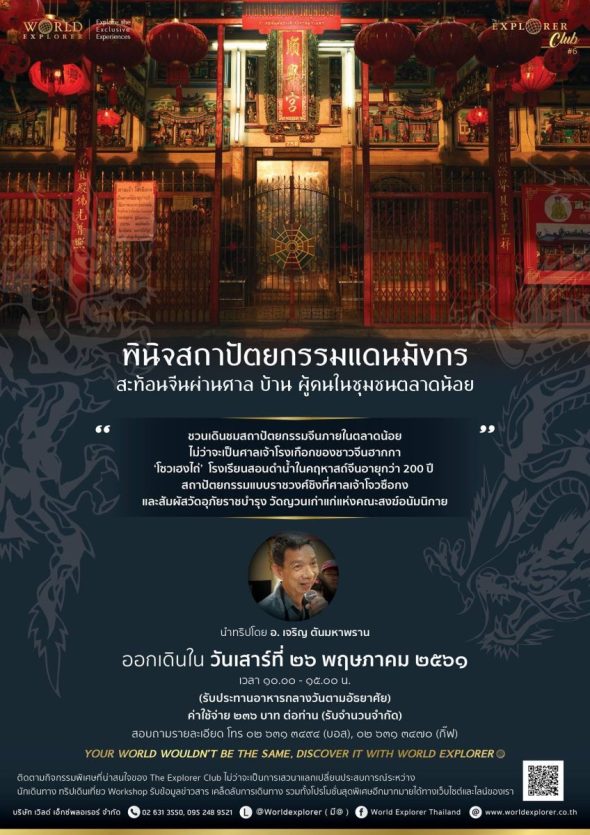
May 26, 2018
World Explore invites those interested to join the 6th The Explorer Club activity, “Examining the Architecture of the Land of the Dragon: Reflecting China through Shrines, Houses, and People in the Talat Noi Community.” Take a walking tour of Chinese architecture in the Talat Noi area, which reflects Chinese society, way of life, history, and beliefs. The trip is led and lectured by Ajarn Charoen Tanmahapran, a community historian. Program: Saturday, May 26, 2018 10:00 – 12:00: Rong Kueak Shrine, So Heng Tai (ancient Chinese mansion) 12:00 – 13:00: Lunch at leisure 13:00 – 15:00: Chow Sue Kong Shrine, Wat Uphai Rat Bamrung Cost: 236 Baht per person (limited space available) For more information and to book the trip, please call 02 631 3494 (Boss), 02 631 3470 (Gift), add Line @worldexplorer, or chat with us on Facebook: https://www.facebook.com/worldexplorerthailand/ Monday – Friday, 09:30 – 17:30

June 17, 2017
We invite you to join the 4th Explorer Club activity, a walking tour titled “Visiting Bang Khun Phrom Palace and the Stories That Took Place There.” Explore the palace of HRH Prince Paribatra Sukhumbandhu, the Prince of Nakhon Sawan, and listen to the story of his life, a figure of great importance during the era before the Siamese revolution. In addition, we will take you to pay homage to Phra Phuttha Thewarat Patimakon at Wat Thewarat Kunchon to bring auspiciousness to your life and admire the uniquely beautiful murals of the ubosot (ordination hall). The tour is led by Ajarn Chitsanupong Thitalakkhana. The walk takes place on Saturday, June 17, 2017, from 10:00 AM to 2:00 PM. The cost is 150 baht per person. Limited availability. For inquiries, please call 02 631 3401 (Q) or 02 631 3470 (Gift).

August 19, 2017
We invite you to join the “The Explorer Club No. 5” walking tour, “Visiting Parusakawan Palace with 120 Years of Thailand-Russia Relations.” Listen to a lecture on the life of Field Marshal His Royal Highness Prince Chakrabongse Bhuvanath, Prince of Phitsanulok, the royal prince who had the closest ties to Russia. Understand the reasons why the King (Rama V) sent his second crown prince to study in Russia under the care of Tsar Nicholas II of the Romanov dynasty, the last emperor of Russia. Learn about the love story of the Siamese prince and the Russian woman who left her homeland to be with her beloved. Walk through the Chitralada Villa within Parusakawan Palace, which is currently hosting the exhibitions “Chakrabongse Exhibition“ and “One Hundred Years of Siam and the Great World War I” to celebrate the 120th anniversary of Thailand-Russia relations and the 100th anniversary of entry into World War I. The lecture and tour will be led by Mr. Chitsanupong Thitalakkhana, an expert on the history of the Chakri dynasty. Schedule: Saturday, August 19, 2017. There are two sessions: Morning session from 10:00 AM – 12:00 PM and Afternoon session from 1:00 PM – 3:00 PM (Limited to 30 participants per session). 10:00 AM – 12:00 PM or 1:00 PM – 3:00 PM. Meet at the 2nd-floor meeting room, Police Museum, Parusakawan Palace. Part 1: Listen to a lecture on the biography of Field Marshal His Royal Highness Prince Chakrabongse Bhuvanath, Prince of Phitsanulok. Part 2: Walk through the "Chakrabongse Exhibition" with a lecture by the guide. Afterwards, depart safely at an appropriate time. Transportation: The Police Museum, Parusakawan Palace, is located at the corner of Si Ayutthaya Road and Ratchadamnoen Nok Road, near the Equestrian Statue of King Chulalongkorn, adjacent to the Metropolitan Police Bureau and opposite Amphorn Sathan Residential Hall. Buses passing by: No. 72, 70, AC 503, or take the BTS Skytrain to Phaya Thai Station, take the exit for Si Ayutthaya Road, and take a taxi (approximately 3 kilometers). Cost: 150 baht per person. You can book the trip at

November 23, 2018
World Explorer was invited by KTC to have a booth at the celebration of the 50th anniversary of Thailand-Kenya relations, so we invite everyone to come meet us and listen to a special lecture by Mr. Pongpol Adireksarn on the topic of a new perspective on travelling to Kenya on November 23, 2017 at KTC POP, B1 Floor, Samanchavanich 2 Building (UBC 2), Sukhumvit 33, near BTS Phrom Phong. You can register for the event starting at 9:30 AM. There are many special promotions from World Explorer at the event, such as round-trip Kenya Airways airline tickets to Nairobi, Johannesburg, Cape Town, Madagascar, and Kilimanjaro starting at 23,400 baht, all-inclusive, with a 50% discount. Kenya Airways airline tickets to Africa on the Bangkok-Nairobi route for 2 people are only 32,500 baht per person, with an extra 5,000 baht discount for the first 5 couples who purchase them at the event. The Kenya Safari tour program is available at a special price starting at 66,500 baht* for travel from February 1-6, 2018. Download Program: https://goo.gl/GdZeHS. A special tour program travelling exclusively with Mr. Pongpol Adireksarn takes place from July 29 to August 5, 2018 (during the high season to see millions of migrating animals). Download Program: https://goo.gl/wyje3X. For details regarding tours or exclusive travel packages, please contact World Explorer Co. Ltd. at Tel. 02 631 3540 or 02 631 3424.

Vasily Saisev, Hero of the Soviet Union, a top-notch sniper who restored Russia’s morale and spirit during difficult times. Captain Vasily Grigoryevich Saisev. Anyone who has seen the movie *Enemy at the Gate*, starring Jude Law, will surely exclaim, “Ohhhhhhh!” Vasily, or “Vasya” as he was nicknamed, was born on March 23, 1915, in the Orenburg Governorate —now Chelyabinsk Oblast in the Ural Mountains region. As a child, Vasya was trained in marksmanship by his grandfather and older brother through hunting wolves and deer. By the age of just 12, Vasya was already bringing home trophies from marksmanship competitions When he reached conscription age, Vasya was assigned to serve as a sailor in the Pacific Fleet in Vladivostok in the Far East. When World War II broke out and Germany launched a surprise invasion of the Soviet Union Vasya and his friends volunteered to be sent to the front lines in Stalingrad, which at the time was a major industrial city named after the leader of the era, Joseph Stalin At that time, Stalin hoped to develop Stalingrad into a world-class industrial hub worthy of bearing his name. On the other side, Hitler—who had initially marched his forces in hopes of capturing Moscow—sought to utterly destroy Stalin’s crown jewel in 1942 – 1943 by reducing Stalingrad to rubble to vent his fury and gain access to oil fields in Chechnya and Azerbaijan. For his part, Stalin was compelled to defend the city bearing his name by any means necessary, so as not to lose face before the people of the world At a time when the Soviet Union was struggling, Stalingrad was a battleground where neither side could gain a clear advantage; both sides took turns seizing control and used every weapon at their disposal to inflict as much devastation on the other as possible. Although the battle lasted only 200 days, the two sides suffered approximately 2 million casualties, making it one of the bloodiest battles in world history. Vasya made a name for himself by killing German soldiers and employing unique hunting techniques—hiding in pipes or lying in wait for days on end without moving—and ultimately 225 people with his Mosin-Nagant sniper rifle. The Soviet authorities publicly honored and publicized the exploits of this hero from the Ural Mountains, making him known to the Soviet people and serving as a source of morale in the fight against the enemy, until he became widely recognized Just a few days before the Battle of Stalingrad ended, Saisev was wounded by a mortar shell and required urgent eye treatment. That same year, Vasya joined the Communist Party, and after recovering from his injuries, he volunteered to fight on the Eastern Front in Germany, eventually being promoted to captain. After the war Vasya moved to Kyiv, where he continued his studies in the textile industry and became a textile engineer. He worked his way up until he became the director of a textile factory in Kyiv. After retiring, Vasya remained in Kyiv until his death at the age of 76 on December 15 December 1991, just ten days before the collapse of the Soviet Union. On January 31, 2006—approximately 15 years later—Vasya’s remains were reinterred near the Mother of Russia Monument in Volgograd (the new name for Stalingrad) alongside other heroes of Stalingrad, with full honors. The city of Stalingrad itself had been completely devastated by the fierce fighting, so reconstruction began in 1946 It took many years for the city to regain its former status as an industrial center. Eventually, during the leadership of Nikita Khrushchev, the city was renamed from Stalingrad to Volgograd—meaning “City on the Volga River”—in 1961, as part of a policy to erase all traces of Stalinism One landmark in Volgograd that cannot be overlooked is the Mother of Russia Monument, erected to commemorate the Russian sons and daughters who sacrificed their lives for their country and to defend their homeland. Construction of the Mother of Russia Monument began in 1959, and by the year
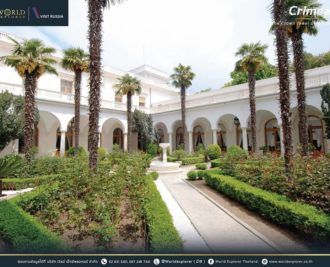
Crimea is Russia’s most important summer resort region. As a peninsula jutting into the Black Sea in the south, it enjoys a warm climate year-round. It is therefore no surprise that, in addition to ordinary Russians vacationing in Crimea, Russian rulers also favored building permanent summer residences in this region The Livadia Palace is one such example. It is considered the most important summer residence of the Romanov dynasty and was the last palace built by the Romanovs. Although the dynasty lost power later on, this place continued to serve as a summer residence for Soviet leaders as well. So, here are 9 facts + 1 about Livadia Palace you should know…… 1) Livadia was the Romanov dynasty’s summer residence. Livadia Palace is located in the southern part of Crimea, not far from the city of Yalta, a popular resort town among ordinary Russians. The climate in this region is renowned as a health resort and an important recreational destination for the city, especially after the construction of the railroad in the 19th century. In 1861, Tsar Alexander II purchased land in the village of Livadia and built a palace as a gift for his empress; shortly thereafter, he built a smaller palace as a gift for Tsarevich Alexander who would ascend the throne and frequently visit this place, and who also passed away here at the Church of the Holy Cross in Livadia It was here that Tsar Nicholas II ascended the throne following his father’s death, and it was in this very church that Princess Alix of Hesse (Princess Alix of Hesse and by Rhine) was converted to the Russian Orthodox faith and received the new name Alexandra Feodorovna, who became the Tsarina consort of Tsar Nicholas II 2) Livadia was the most expensive “dacha” of the Romanov dynasty At the behest of Tsar Nicholas II, the original Livadia Palace was demolished and a new, more magnificent palace was built in its place—a palace that still stands today. The Tsar spent several million gold rubles on its construction The cornerstone was laid in 1910, and construction was completed just 17 months later. 3) Livadia served as a royal retreat for relaxation and recreation. The royal family frequently traveled to Livadia during the spring and fall seasons traveling by royal train from St. Petersburg to Sevastopol and then by royal ship to the port of Yalta, accompanied by a grand welcoming procession befitting his majesty. The Tsar Empress Zarina, and their daughters and sons would enjoy themselves by breathing the fresh air, taking walks, swimming, sunbathing, hunting, or going for drives during their stay They also enjoyed tennis and photography, and some of these photographs have survived to this day. The royal family made their final visit to Livadia in the spring of 1914, before the outbreak of World War I and the subsequent sudden change of government in 1917 4) Livadia was designed by Nikolai Krasnov, a young and passionate court architect. The Livadia Palace was designed by Nikolai Krasnov, the Imperial Architect who came from a peasant family. At the age of just 24, he received a royal commission from the Imperial Court to lead a team of architects in designing residential buildings in Yalta. More than 60 significant buildings were designed by Krasnov Following the political upheaval of 1917, Krasnov fled to Constantinople, Malta, and Belgrade, in that order, and was granted royal patronage by Tsar Alexander Karajorjevich of Yugoslavia, who appointed him as court architect and commissioned him to design several royal palaces in Yugoslavia, one of which was the Royal Palace of Dedin, the residence of King Alexander
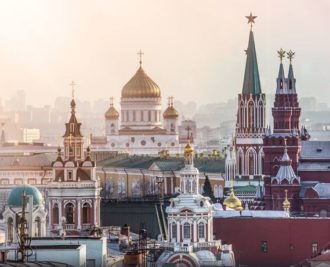
Last weekend (September 9), Russia held a major celebration to mark the 870th anniversary of the founding of Moscow, with numerous events taking place at various locations throughout the city. President Vladimir Putin, who attended a charity concert held in Red Square to mark the occasion, spoke about the celebrations as well as the construction and renovation projects underway in various parts of the city aimed at improving the quality of life for Muscovites. Today, Moscow is the largest city in Russia and one of the largest capital cities in Europe, with a population of 12 million. But before reaching this point, Moscow has weathered many events, both good and bad. Let’s take a trip back in time to get to know Moscow —both the former and current capitals of Russia. “Come to me, Brother, to Moscow” is the message that Prince Yuri Dolgorukiy wrote to Prince Sviatoslav Olgovich, his relative and ally, in A.D. 1147. This was the first recorded mention of the city of Moscow Later, in 1156, Prince Yuri built a wooden fortress on the site of today’s Kremlin, and is thus regarded as the founder of Moscow, even though people had already been living in the area before that. At that time, Moscow At that time, it was still a small town before it began to develop into an important commercial center. During the reign of Dmitry Donskoi, white limestone was used to build the walls, earning Moscow the nickname “White Stone City” (Belokamennaya). As time passed, the white limestone began to crumble. During the reign of Ivan III the Great, the Kremlin was renovated once again under the supervision of an Italian architect. This time, used red brick for the walls—the color we associate with the Kremlin today. By the time of Tsar Ivan IV the Terrible, he adopted the title “Tsar” to refer to “Caesar” or “Emperor” and to assert himself as the third successor to the Roman Empire following the fall of Constantinople. During his reign, St. Basil’s Cathedral was built, one of Russia’s most important landmarks. The cathedral was constructed to celebrate the victory over the Khan of Kazan and the expansion of the empire to the east. In the 17th century, during the Time of Troubles, Moscow was occupied by the Poles until Kuzma Minin and Dmitry Pozharsky rallied forces to liberate the city from Polish rule (monuments to both men stand in front of St. Basil’s Cathedral) This was followed by the rise to power of Mikhail Romanov in 1613, marking the beginning of the Romanov dynasty’s rule over Russia for more than 300 years. Tsar Peter the Great moved the capital to St. Petersburg in
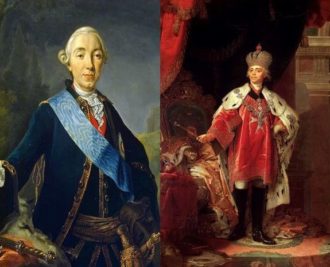
The Tsar of Russia was the supreme ruler of the Russian Empire, but throughout the Romanov dynasty’s history spanning more than 300 years, several tsars met tragic fates. As we all know, Tsar Nicholas II who was executed along with the Romanov family in 1918 during the massacre in Yekaterinburg. But before him, there were four other tsars who met tragic ends. Let’s take a look at who they were and what led to their deaths 1. Tsar Ivan VI (Ivan VI Antonovich of Russia) Tsar Ivan VI, or Ivan Antonovich (1740–1764) was born during what is known as the “era of palace coups” in the 18th century, when rulers came and went rapidly under the influence of the court nobility He was proclaimed Tsar at the age of just two months, succeeding Empress Anna Ivanovna in 1740. Two months later, the faction of nobles supporting Tsar Ivan VI was defeated by the opposing faction Tsar Ivan VI, who had not yet learned to walk, was immediately imprisoned. He was confined to a remote castle and completely cut off from all contact with the outside world throughout his childhood. In 1764 a group of soldiers attempted a coup to seize power and free him, but in the end, the unfortunate Ivan VI was stabbed to death by his guards to prevent the conspirators from seizing him. He died at the age of 23, bringing his tragic life to a close. 2. Tsar Peter III of Russia (1728–1762), born a German prince with the name Karl Peter Ulrich, was the great-nephew of Peter the Great Upon the death of Empress Elizabeth I, his aunt, he ascended the throne as Peter III. He reigned for only six months before being deposed by the Imperial Guard, led by Alexei Orlov under the watchful eye of his German empress, Catherine, because he pursued policies that favored Prussia too heavily and was about to wage war against Denmark without authorization Empress Catherine assumed power as Empress Catherine II, while the former Tsar Peter III was imprisoned at the palace in Ropsha before passing away a week later for reasons that remain unclear He was 34 years old at the time of his death. Some say he died accidentally while fighting in his confinement out of a fit of rage, while others claim that Orlov carried out the act with the approval of Empress Catherine II herself 3. Tsar Paul I of Russia